Introduction
As pet ownership becomes increasingly nuanced, many multi-pet households face the challenge of managing specialized diets for each pet. Imagine having a dog with a grain allergy sharing a home with a cat that thrives on specific proteins. This scenario is common, and traditional feeding strategies may fall short in providing the necessary dietary nuances. As technology evolves, so do solutions for seamlessly managing pet care. Enter the era of biometric smart pet feeders.
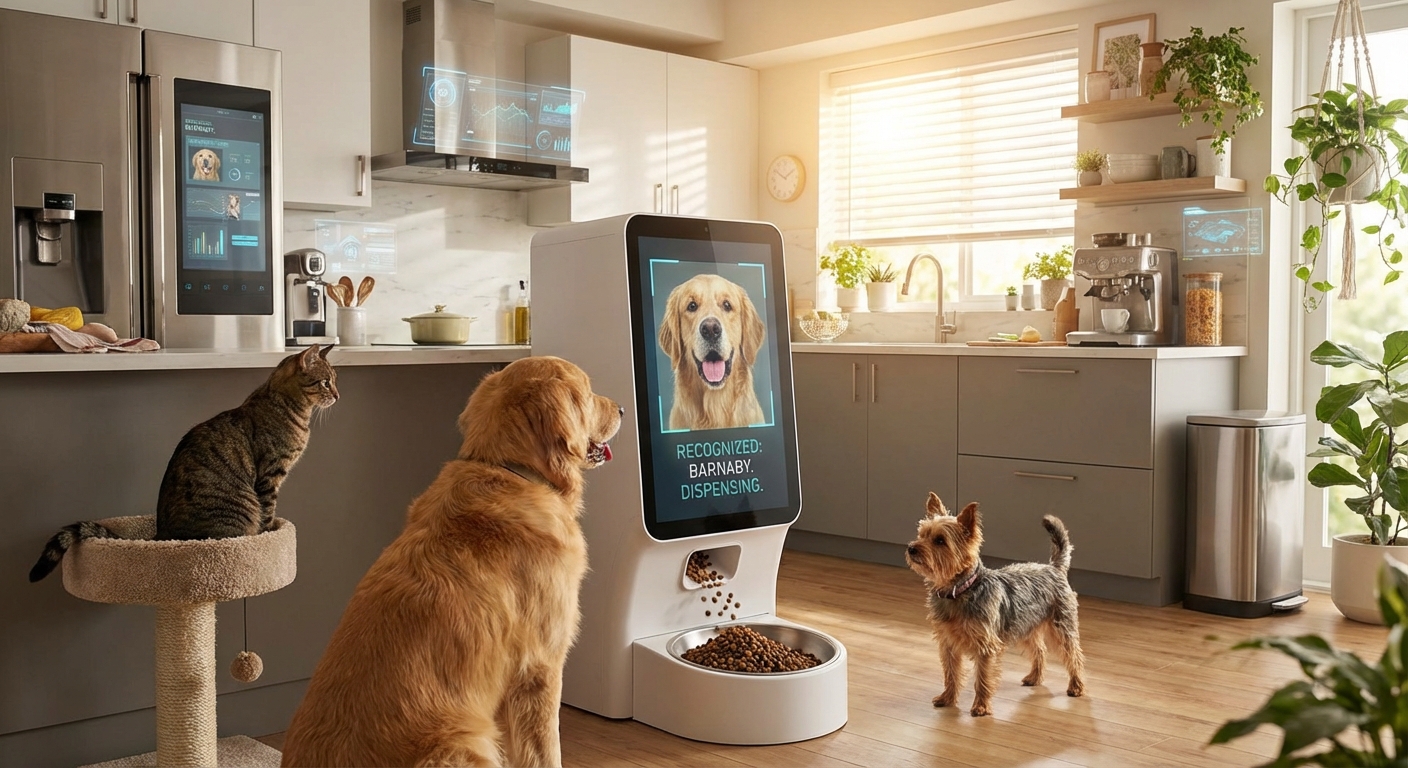
Biometric smart pet feeders leverage advanced AI-driven vision sensors to revolutionize how modern pet homes function. These feeders are not just about convenience but are central to the health and well-being of pets in multi-pet households. By eliminating the need for RFID tags and embracing facial or coat recognition technology, these feeders offer personalized nutrition plans that adapt over time. This article deep-dives into the benefits and real-world applications of this innovative technology.
Addressing the real concerns of pet owners, biometric smart pet feeders are not just tech gadgets; they are transformative tools that prevent food stealing, reduce stress, and ensure dietary needs are met without human intervention. For pet owners determined to provide the best possible care, understanding these feeders’ implications is essential.
The Technology Behind Biometric Smart Pet Feeders
AI-Driven Vision Sensors
The foundation of biometric smart pet feeders lies in the use of AI-driven vision sensors. These sensors are capable of identifying individual pets through detailed facial or coat recognition. Unlike traditional feeders that use RFID tags requiring active management, vision-based systems offer hands-free operation.
Evolution of Pet Care
Traditional feeders often depended on RFID tags for access control, which presented limitations such as losing tags or discomfort for pets. The advent of biometric feeders marks a shift towards more sophisticated, less invasive solutions. This evolution signifies an increased understanding of pet comfort and tech integration in pet care ecosystems.
Real-World Application
Imagine a household with multiple pets where each has unique dietary restrictions. Biometric smart feeders ensure that each animal receives its designated meal without interference from others. This hands-off approach not only ensures dietary conformance but also reduces food wastage.
Impact on Pet Health
Preventive Health Benefits
Utilizing technology to maintain proper dietary habits plays a crucial role in preventive pet health. Proper control over food intake prevents obesity—a growing health concern among pets. Moreover, technology aids in adhering to specific diets necessary for health conditions like diabetes or allergies.
Behavioral Adjustments
Biometric feeders not only address dietary needs but also influence pet behavior positively. By providing consistent and personalized nutrition, pets are less likely to engage in food aggression or anxiety over mealtime, promoting a harmonious environment.
Monitoring and Alerts
Advanced feeders come equipped with monitoring capabilities, sending alerts to owners in case of irregular feeding patterns. This feature acts as a preliminary health indicator, highlighting potential issues before they escalate.
- Accurate portion control to prevent overfeeding
- Customizable feeding schedules tailored to individual pet needs
- Ensure compliance with veterinary dietary recommendations
Practical Applications in Multi-Pet Households
Diverse Dietary Needs
A household with both dogs and cats, each requiring different diets, can be chaotic. Biometric feeders simplify this by making sure only the intended pet accesses its meal.
Reducing Food Stealing
Food stealing among pets can be a significant issue, leading to overfeeding of some and underfeeding of others. These feeders eliminate such concerns by using recognition technology to provide access exclusively to the correct pet.
Ease for Pet Owners
For pet owners, especially those with busy lifestyles, biometric smart feeders offer peace of mind. They reduce the need for constant surveillance and manual feeding, ensuring pets are cared for even in the owner’s absence.
Future Outlook
Advancements in AI and Machine Learning
As AI and machine learning continue to advance, the precision and capabilities of biometric feeders will improve. Future iterations may offer more intricate health diagnostics and behavioral insights.
Expert Opinions
“Biometric feeders are paving the way for smarter, more responsive pet care,” says Dr. Jane Goodall, a renowned veterinarian and pet nutrition expert.
Long-Term Benefits
The long-term benefits of biometric feeders include healthier pets, reduced veterinary bills, and happier households. They represent a significant step towards holistic pet care.
Conclusion
The advent of biometric smart pet feeders marks a significant shift in how pet care is approached. By ensuring personalized nutrition and aiding in preventive health care, these devices are more than just luxury items. They serve as essential components in multi-pet households, catering to diverse dietary needs and enhancing overall well-being.
The future of pet care lies in technology, and embracing innovations such as biometric feeders ensures that pets can enjoy healthier, happier lives. For pet owners, staying informed and investing in such technologies is an act of love and responsibility that reaps profound, lasting benefits.